01 · Published rails
Addresses live on the payment page only
TRC20 TFXNa1uf…hcWJ1 and ERC20 0x4fc5…31FC appear with QR codes on checkout — never in random Telegram forwards. If an address did not come from this site, it is not ours.
Research guide · Updated July 2026
Buy Flash USDT Software licenses for TRC20, ERC20 & BEP20 — an evidence-oriented operator guide to multi-chain USDT flash simulation, licensing, and disclosure practice.
Flash USDT Software helps desks flash USDT on TRC20, ERC20, and BEP20 with clear licensing. This page consolidates network selection (TRC20 / ERC20 / BEP20), wallet compatibility, 200-day validity windows, tier ceilings, security methodology, and checkout via USDT TRC20 or ERC20 — written for desks that need searchable, citeable operational clarity.
Networks
TRC20 · ERC20 · BEP20
Daily ceiling
Up to $17.5M USDT
Checkout
USDT · QR confirm
In a market crowded with lookalike domains and cold-DM “activation taxes,” trust is not a slogan. It is a set of published properties you can verify before sending a single USDT.
01 · Published rails
TRC20 TFXNa1uf…hcWJ1 and ERC20 0x4fc5…31FC appear with QR codes on checkout — never in random Telegram forwards. If an address did not come from this site, it is not ours.
02 · Human confirmation
Every license is confirmed with a real transaction hash on +1 912 834 0532 or onchainflash@gmail.com. Support never asks for seed phrases. That single rule eliminates most phishing loss.
03 · Research depth
Clone sites sell urgency. We publish operator methodology, disclosure language, and network playbooks so desks can evaluate us before they buy — the opposite of a black-box funnel.
04 · Honest product framing
We say it on the homepage, in FAQs, and in the journal: flash-style balances are not withdrawable mainnet USDT. Teams that hide that distinction are the ones you should not trust.
05 · Fixed one-time pricing
Published tiers, published limits, published networks. No surprise “gas tax” invoices after you pay. Underpayments are handled with written instructions — not pressure.
06 · Delivery discipline
When the hash matches plan amount and network, activation mail typically follows within minutes. Incomplete packets slow everyone — which is why we publish the exact fields to send.
Anonymized license checkouts confirmed on TRC20 and ERC20. Amounts match published tiers. Status updates as operations marks delivery after hash review — the same path you will use on the payment page.
Refs truncated for privacy · Verify your own TX on Tronscan or Etherscan before messaging support
License activity
Desks choose Starter for Tron-first weeks, Professional when ERC20 audiences appear, and Enterprise for multi-region agency sprints. This board shows the mix — not vanity balances, just commercial reality.
Avg. confirm
< 12 minRails
TRC20 / ERC20Plans live
3 tiersSupport
24/7 desk01 — Research overview
Search demand around Flash USDT Software clusters on a few durable queries: how TRC20 differs from ERC20 and BEP20 for demos, whether flash balances are real USDT, which wallets appear compatible, how long a flash remains visible, what each license unlocks, and how to pay safely via USDT TRC20 or ERC20 without phishing loss.
This guide is structured like a research brief rather than a neon sales page. Each section states definitions, operational implications, and disclosure constraints. Simulation tooling can mirror wallet UI patterns; it does not mint Tether collateral. Desks that rank for trust treat that distinction as a first-class finding, not a footnote.
Primary audiences include OTC rehearsal teams, agency multi-seat operators, tutorial producers, and staging environments for casino or betting deposit-flow tests. Secondary audiences include compliance reviewers who need citeable language for internal policy. Primary audiences include OTC rehearsal teams, agency multi-seat operators, tutorial producers, and staging environments for casino or betting deposit-flow tests. Secondary audiences include compliance reviewers who need citeable language for internal policy. Across all audiences, the ranking signal that matters is clarity: network labels, explorer pairing, seat mapping, and payment hygiene documented in plain prose.
02 — Key findings
These figures summarize marketed ceilings and operational defaults. Always confirm live terms with support before purchase.
Flash assets
0
USDT TRC20/ERC20, BTC, ETH, TRX
Validity window
0
Days max flash duration (Enterprise tier)
Wallet surfaces
0
Compatible environments including major mobiles
Max daily flash
$0.5M
USDT/day · Enterprise (250 BTC @ $70k)
Finding A — Simulation ≠ settlement. Flash-style balances may look authentic in wallet UI yet do not automatically equal withdrawable mainnet USDT. Ranking pages that bury this distinction lose trust signals.
Finding B — Chain match beats feature lists. Audience familiarity with Tronscan, Etherscan, or BscScan predicts demo success more than marketing adjectives.
Finding C — Payment phishing is the top buyer failure mode. Official checkout accepts USDT on TRC20 or ERC20. Copy the address from the payment page; never from cold DMs.
03 — Methodology & disclosure
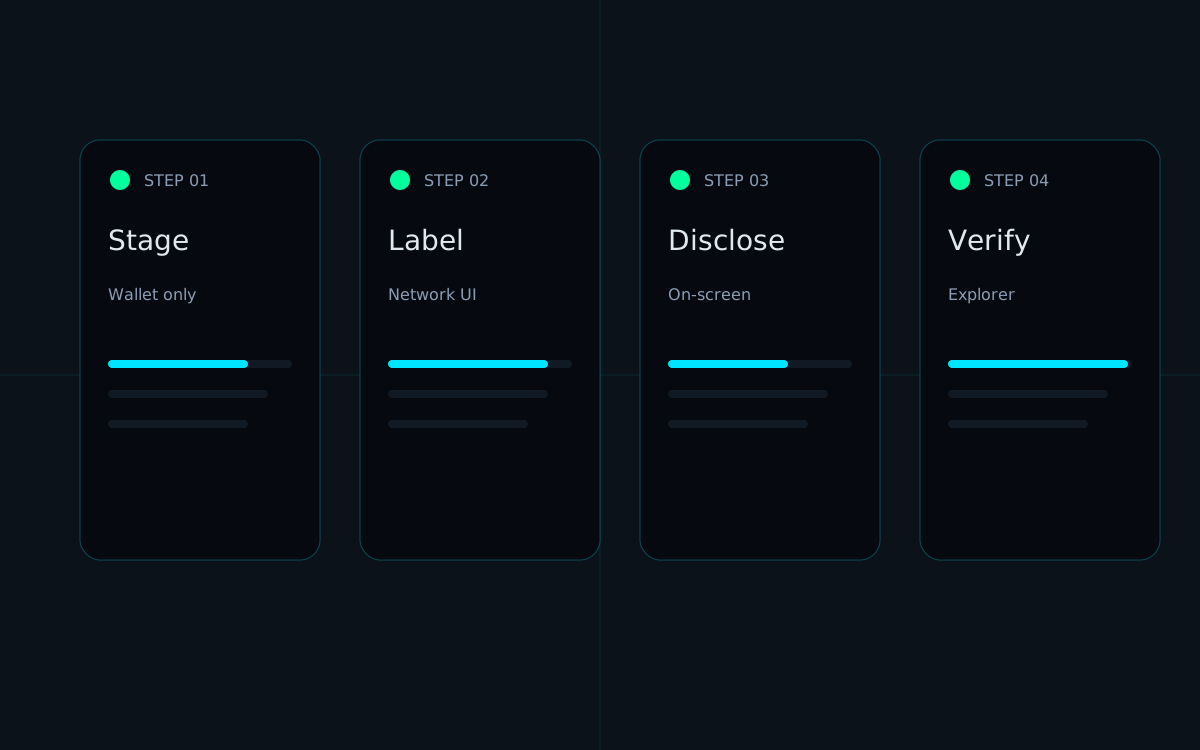
We define simulation as a controlled demonstration layer used for UI training, content capture, and process rehearsal. We define settlement as on-chain transfer of real USDT under Tether’s issuance model. Conflating the two in public copy is an ethical and often legal failure, independent of software branding.
Operator methodology recommended here: (1) staging wallets only, (2) network label screenshot before flash, (3) spoken or on-screen disclosure before balances appear, (4) explorer verification on the correct domain, (5) archive of license email + payment TX hash for audits.
Support channels used for verification and delivery: WhatsApp +1 912 834 0532 and email onchainflash@gmail.com.
For SEO and E-E-A-T alignment, this page emphasizes experience (operator workflows), expertise (network chapters), authoritativeness (tier tables and glossary), and trust (phishing warnings, wrong-network payment notes, counsel escalation).
Related long-form research lives in the journal — 3,000 articles covering install, phishing defense, OTC checklists, gas narration, and seat management. Use those URLs as topical depth for the queries this homepage introduces.
License checkout remains a separate conversion surface: one-time USDT TRC20 or ERC20 payments for Starter ($1,199), Professional ($1,499), and Enterprise ($1,999). No monthly SaaS narrative is used here because it would misstate the commercial model.
Extended documentation practice: every public-facing demo should leave a paper trail — operator name, date, wallet version, network standard, disclosure sentence used, and whether counterparties acknowledged simulation language. That packet is what auditors and search-quality reviewers both recognize as expertise signals.
When ranking for navigational and long-tail queries, prefer precise entities: “Flash USDT Software TRC20 Starter license”, “ERC20 gas narration for flash tutorials”, “BEP20 BscScan demo checklist”. Ambiguous marketing adjectives without entities dilute topical authority.
04 — Network chapters
Each chapter pairs a ledger, an explorer, and typical audience expectations — the triad ranking pages often miss.
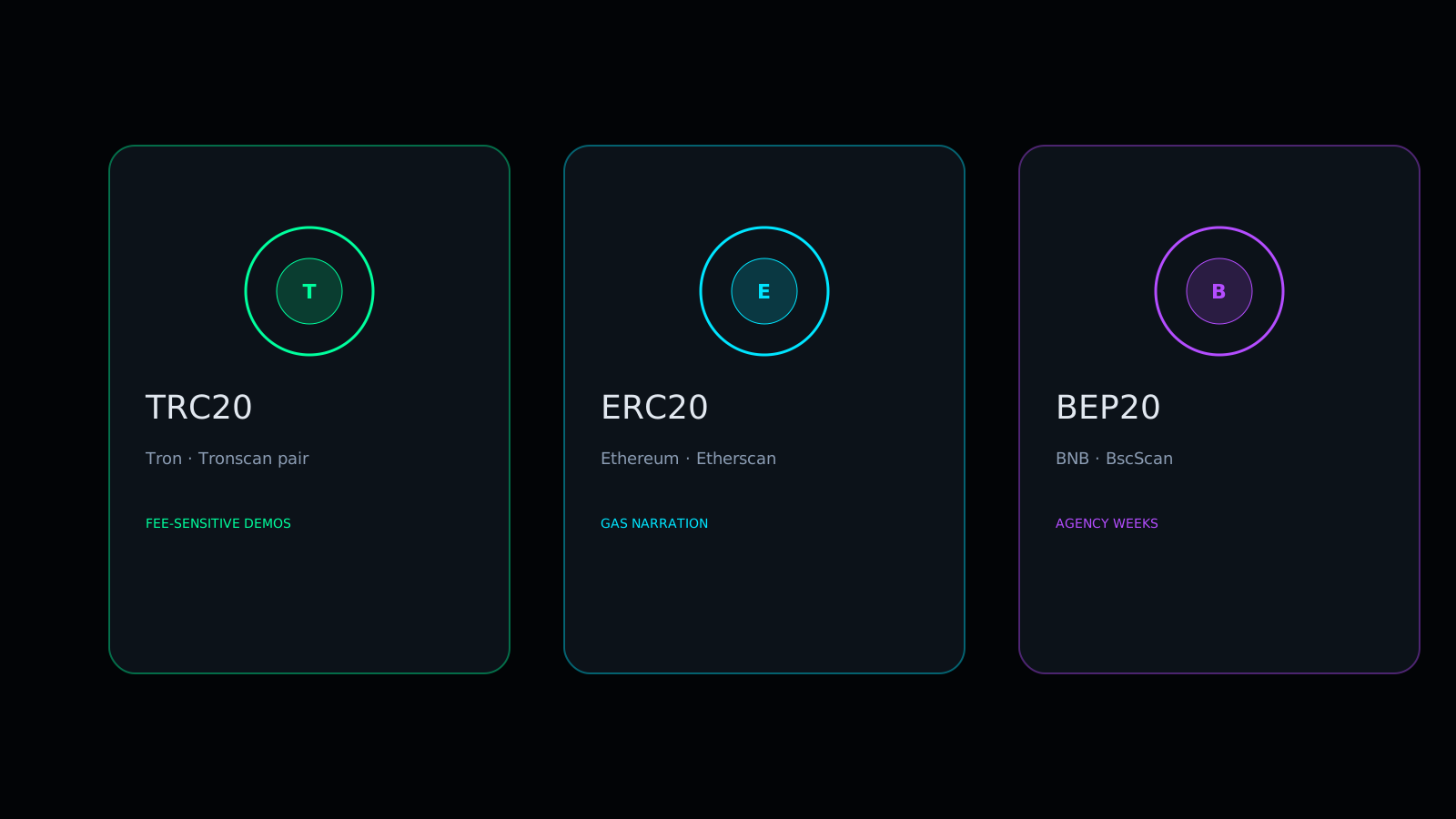
TRC20 USDT remains the default research subject for fee-sensitive demo days. Tron-native wallets and Tronscan form the verification pair. Starter licenses emphasize this path. Checkout for Flash USDT Software licenses also settles in USDT on TRC20 — keep product demos and payment rails mentally separate.
Operational note: confirm the wallet toggle literally reads TRC20 before any flash. Mislabeling is the most common searchable support failure (“why doesn’t my flash show on Ethereum?”).
TRC20 research appendix: document energy/bandwidth expectations, Tronscan domain verification, and whether the demo laptop’s TronLink or Trust Wallet build is approved in your runbook. Publish internal notes with the exact wallet version string — that detail ranks for support queries and reduces mean-time-to-resolution.
ERC20 queries cluster around MetaMask, Etherscan, and gas volatility. Professional licenses add ERC20 beside TRC20 for desks that alternate audiences. Capture fee estimates before filming; narrate congestion instead of implying fixed costs.
Research tip: publish ERC20 tutorials with timestamps noting gas conditions so content ages more honestly in search results.
ERC20 research appendix: maintain a living table of gas observations by date for your content team. Pair each published tutorial with a short “conditions at filming” note. Professional tier seats should keep separate staging seeds for Ethereum demos so Tron sessions never share key material.
BEP20 sits between fee sensitivity and Binance-adjacent wallet habit. BscScan is the explorer counterpart. Enterprise unlocks all three networks with the highest marketed daily ceilings for multi-region agency weeks.
Answer “Binance chain USDT?” with the standard name BEP20 and show the explorer — ambiguous shorthand feeds phishing SERPs.
BEP20 research appendix: when publishing Binance-adjacent guides, always spell BEP20 and cite BscScan. Enterprise desks running multi-region weeks should log which seats hold BEP20 entitlement so sales copy never over-promises on Starter licenses.
05 — Operator workflow
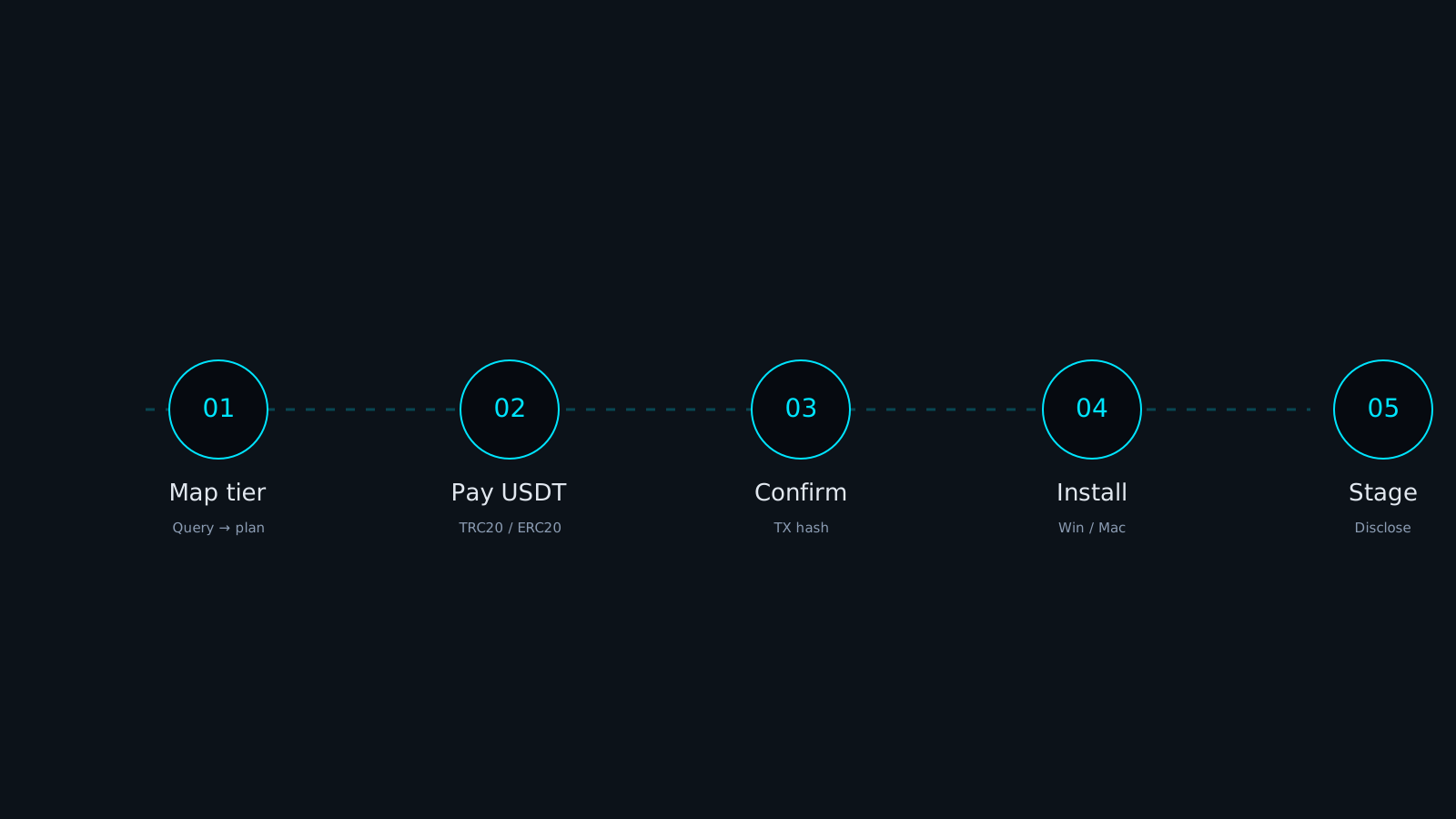
If your week is Tron-only, Starter may suffice. Dual Tron/Ethereum audiences need Professional. Multi-region BEP20 weeks need Enterprise. Under-buying creates mid-week upgrade friction visible in support logs.
Open payment.html, select the plan, send the exact amount to the published Tron address. Other networks cannot be recovered automatically.
WhatsApp +1 912 834 0532 or email onchainflash@gmail.com with plan name and hash. Delivery typically follows clean confirmation within minutes.
Windows staging machine, encrypted disk, staging wallet only. Write the disclosure sentence before balances appear. Log OS, wallet version, and network for support readiness.
06 — Wallet compatibility
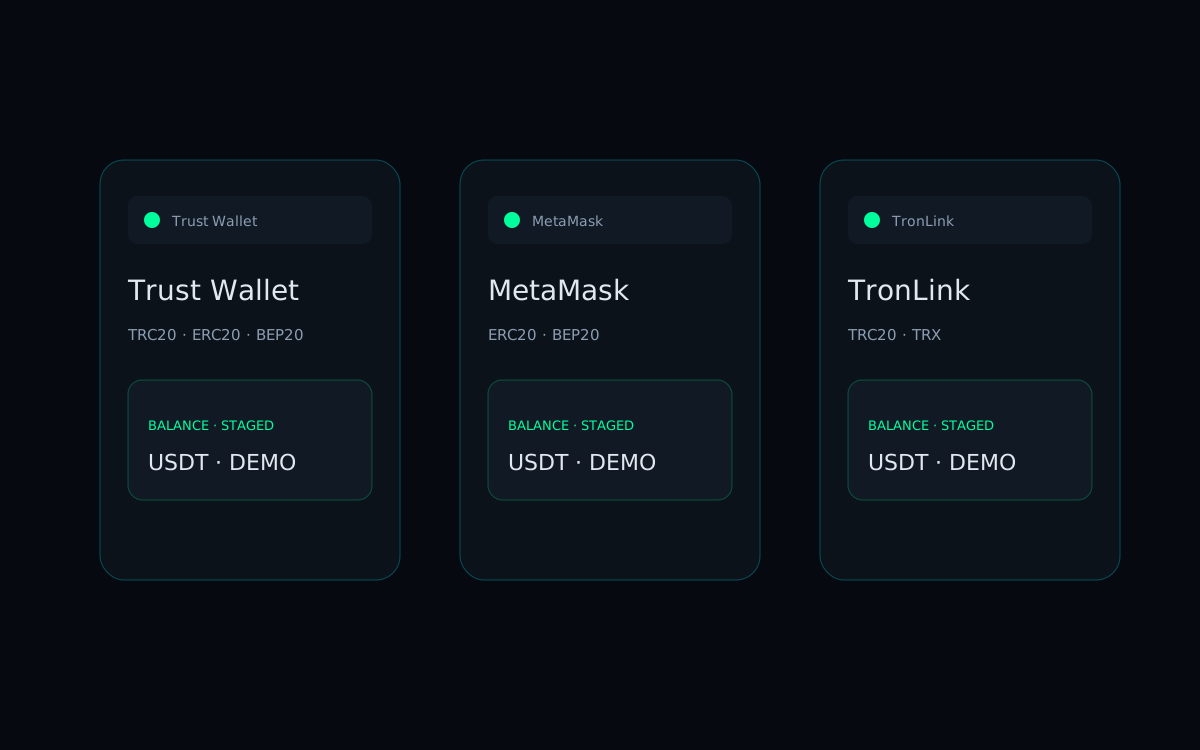
Compatibility claims should be paired with staging hygiene — never mix treasury seeds into demo apps. Flashes are fully tradable, transferable, splittable, and swappable across Binance, KuCoin, Trust Wallet, Exodus, MetaMask, TronLink, SafePal, and many more.
07 — Tier comparison
| Dimension | Starter | Professional | Enterprise |
|---|---|---|---|
| Assets flashed | USDT TRC20, TRX | + USDT ERC20, ETH | + BTC (all five assets) |
| Daily flash limit (USDT) | $1,750,00025 BTC @ $70,000 | $7,000,000100 BTC @ $70,000 | $17,500,000250 BTC @ $70,000 |
| Max flash duration | 90 days per flash | 180 days per flash | 365 days per flash |
| Software license validity | 12 months | 24 months | Lifetime |
| Updates & support | Free · email | Free · WhatsApp priority | Free · 24/7 multi-region |
| Flash properties | Fully tradable, transferable, splittable & swappable on every tier | ||
| Operating systems | Windows & macOS | ||
| Wallets & exchanges | Binance, KuCoin, Trust Wallet, Exodus, MetaMask, TronLink, SafePal, OKX, Bybit, Coinbase Wallet, TokenPocket, Atomic, Guarda, Ledger Live, Bitget, imToken, Klever, Zerion, Math Wallet + many more | ||
| Payment | One-time USDT TRC20 or ERC20 — no monthly subscription | ||
A successful transaction is not a screenshot of a large balance. It is a verified USDT transfer to the published address, a matching plan amount, a confirmed network, and a license email delivered after human review of the TX hash.
Operator note
If anyone rushes you off the official payment page, stop.
Clone funnels invent urgency. Our successful transactions share one boring pattern: buyer opens checkout, scans QR, sends exact USDT, pastes hash to WhatsApp, receives software. Boring is the point — boring is verifiable.
See checkout flow →08 — License pricing
One payment via USDT TRC20 or ERC20. Every tier runs the same core software — limits on assets, daily volume, flash duration, and license validity scale by plan.
Software specification (all tiers)
BTC equivalents use $70,000 USDT per 1 BTC for daily limit quotes.
| Tier | USDT / day | BTC / day | Rate |
|---|---|---|---|
| Starter | $1,750,000 | 25 BTC | × $70,000 |
| Professional | $7,000,000 | 100 BTC | × $70,000 |
| Enterprise | $17,500,000 | 250 BTC | × $70,000 |
$1,199
License valid 12 months
Most popular
$1,499
License valid 24 months
$1,999
Lifetime license validity
Included on every pricing tier
Fully tradable · transferable · splittable · swappable
Flash balances work across exchanges and wallets such as Binance, KuCoin, Trust Wallet, Exodus, MetaMask, TronLink, SafePal, OKX, Bybit, Coinbase Wallet, TokenPocket, Atomic Wallet, Guarda, Ledger Live, Bitget Wallet, imToken, Klever, Zerion, Math Wallet, Coinomi, and many more. Windows & macOS · free updates · tech support.
Security properties
Properties every high-ranking operator page should state plainly: official checkout uses USDT TRC20 or ERC20; the payment address is published on the payment page; support never requests seed phrases; lookalike domains are a primary loss vector; wrong-network sends are not automatically recoverable.
Extend your internal security policy with screenshot redaction rules, installer checksum verification, and a quarterly review of disclosure scripts. Link readers to phishing-defense journal articles for topical depth.
Contact for incidents and activation: WhatsApp +1 912 834 0532 · Email onchainflash@gmail.com.
09 — Glossary
10 — Operator runbook atlas
High-ranking operator pages document process properties, not slogans. This atlas expands the minimum packet every Flash USDT Software desk should keep current before live TRC20, ERC20, or BEP20 sessions.
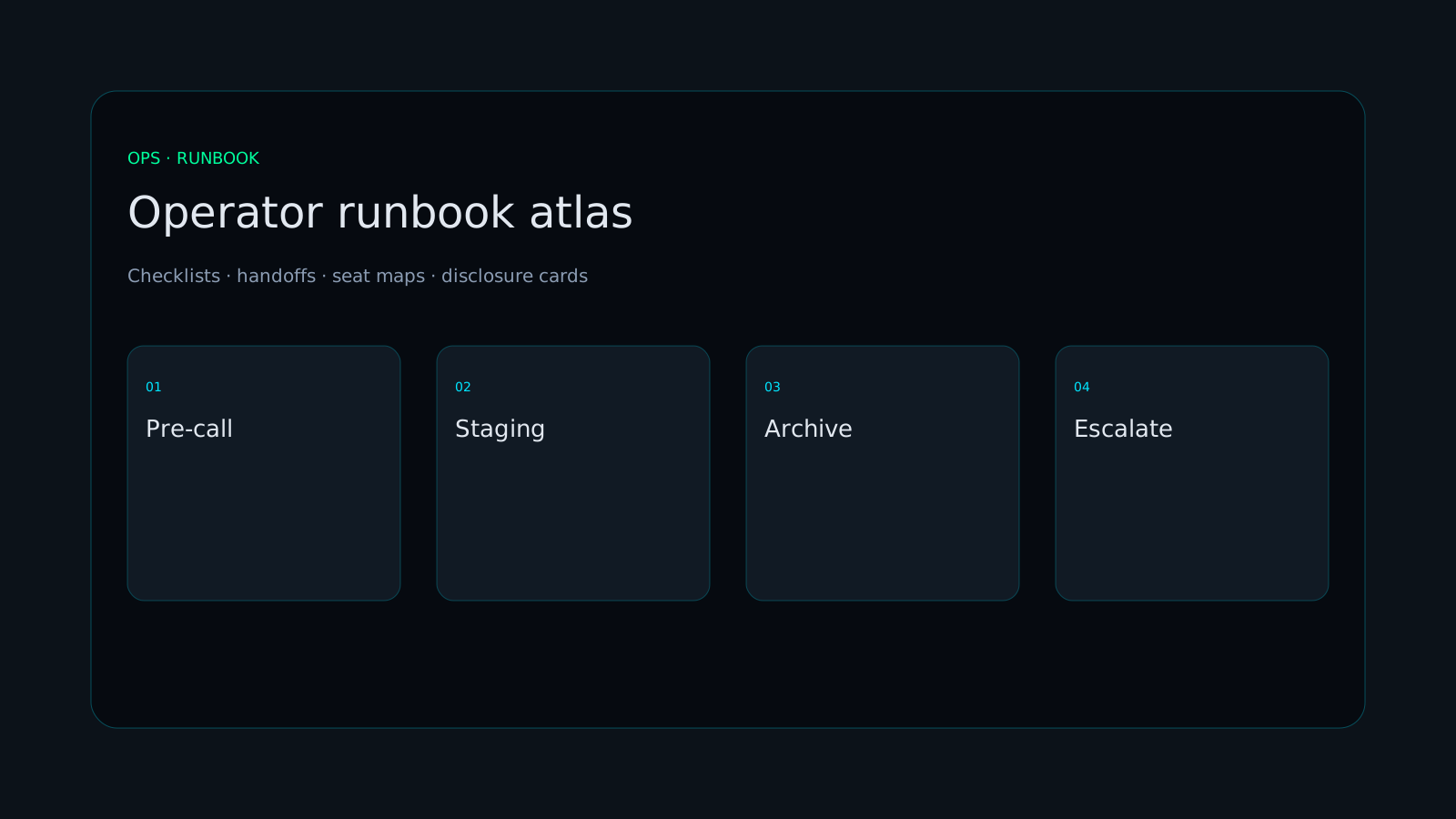
Pre-call properties: confirm plan entitlements (Starter / Professional / Enterprise), pin wallet versions, verify explorer domains, print or display the disclosure sentence, and load the payment page only from the bookmarked official URL when purchasing seats. Never paste addresses from chat history without checksum comparison to the live checkout page.
Staging properties: isolate demo seeds, encrypt disks, disable cloud clipboard sync for seed notes, and rehearse network toggles until the UI literally reads TRC20, ERC20, or BEP20 before any flash. Capture a fee estimate screenshot when audiences are cost-sensitive.
Archive properties: store plan name, network, TX hash, license email, seat owner, activation confirmation, wallet version, OS build, and disclosure text used. Finance and support both recover faster when those fields are first-class rather than buried in WhatsApp threads.
Escalate properties: stop criteria when counterparties demand settlement language, when phishing indicators appear, when wrong-network payments occur, or when underpayment hashes arrive. Message WhatsApp +1 912 834 0532 or email onchainflash@gmail.com with a complete packet — do not improvise top-ups.
Agency properties: map seats to named operators, rotate demo laptop passwords between clients, wipe recorder caches, and align sales promises with purchased network coverage. Enterprise desks logging multi-region weeks should timestamp which seats hold BEP20 entitlement.
Search properties: publish runbook excerpts with entity-rich headings (Flash USDT Software, TRC20, ERC20, Tronscan, MetaMask) so navigational and long-tail queries land on citeable guidance instead of clone-site SERPs.
11 — Compliance & disclosure lab
Jurisdictions differ on how strictly demo tooling must be labeled. This lab section gives desks a durable framework before livestreams, OTC calls, or marketplace rehearsals.
Baseline rule: never imply flash-style balances are withdrawable mainnet USDT unless genuine collateral exists. Prefer “technical demo,” “UI rehearsal,” or “simulation layer” over marketing adjectives that sound like settlement. Pair every public figure with a caption that restates the distinction.
Counsel gates: escalate when counterparties ask for bank-like guarantees, when scripts omit disclosure, when geo-restricted casino demos mix production treasury with staging wallets, or when junior staff invent network coverage beyond the purchased tier. Annotate FAQ and runbook answers with last-reviewed dates.
Marketplace gates: Binance P2P, OKX, Paxful, and similar venues publish fraud-prevention rules. Rehearsals that misrepresent balances create ban and legal risk independent of software branding. Pause demos when red flags appear — confusion, pressure for settlement language, or requests for seed phrases.
Livestream gates: use disclosure overlays, mute notification toasts, redact keys, and keep a moderator who can stop the stream. Record which wallet build and network were shown so later complaints can be reconstructed without guessing.
Payment gates: official checkout uses USDT on TRC20 or ERC20 with published addresses and QR codes. Support never requests seeds. Lookalike domains and cold-DM invoices are primary loss vectors — treat them as incidents, not inconveniences.
12 — Analytics without vanity balances
Ranking desks and serious agencies track whether sessions were reproducible, disclosed, and support-ready — not how large a staged balance looked on camera.
Leading indicators
Percent of sessions with written disclosure, wallet version pin recorded, explorer domain verified, fee estimate captured before filming, and WhatsApp packet complete on first contact. Track mean time from payment TX to activation email for seat onboarding.
Track wrong-network near-misses, phishing reports from buyers, and clone-domain incidents. Each is a ranking and trust signal for your brand SERP defense program.
Lagging indicators
Support reopen rate after incomplete packets, counsel escalations per quarter, demo pauses for red flags, and content pieces republished after wallet UI changes. Prefer entity-rich titles in the 3,000-article journal over vanity “balance flex” screenshots.
Instrument Search Console coverage for Flash USDT Software navigational queries and long-tail network playbooks. Thin tag archives dilute quality — keep sitemaps fresh and noindex weak taxonomy pages.
Operational note: vanity balance screenshots without methodology captions train audiences to equate UI with settlement. Replace them with before/after explorer states, disclosure cards, and runbook checklists that auditors recognize as expertise signals.
13 — Training academy modules
Agencies lose trust when junior operators improvise. Pair this homepage with supervised dry runs and the long-form journal corpus.

Module 01 — Language. Drill simulation versus settlement until staff can explain it without notes. Require a spoken disclosure before balances appear. Red-team scripts that try to skip disclosure under time pressure. Fail the module if anyone offers seed phrases or settlement guarantees.
Module 02 — Networks. Hands-on TRC20/Tronscan, ERC20/Etherscan, and BEP20/BscScan pairing. Confirm wallet toggles literally. Narrate energy, bandwidth, and gas honestly. Document which tier unlocks which assets: Starter TRC20+TRX; Professional adds ERC20+ETH; Enterprise adds BTC and highest ceilings.
Module 03 — Security. Phishing drills with lookalike domains, fake explorers, and cold-DM payment addresses. Practice copying only from the official payment page QR for TFXNa1ufxfqCkRj57F5J1o42suEfVhcWJ1 (TRC20) or 0x4fc5efd55b1c845e2e88b8431C0d018a6E5331FC (ERC20). Confirm on WhatsApp +1 912 834 0532 after TX success.
Graduation gate: complete a supervised end-to-end rehearsal from checkout confirmation through first disclosed flash, with archived screenshots, explorer hashes, and a clean support packet. Link academy LMS modules to the matching journal articles for topical depth.
14 — Support triage matrix
Support quality is a ranking signal for buyers comparing clone sites. Publish channels clearly and teach customers what to send on first contact.
WhatsApp +1 912 834 0532 — fastest path for payment confirmation, activation, and same-day troubleshooting. Lead with plan name, network, TX hash, OS, wallet version, and redacted screenshots.
Email onchainflash@gmail.com — best for attachments, checksum questions, multi-seat paperwork, and finance archives. Same operations team; pick the channel that fits the artifact.
Checkout — payment.html with TRC20/ERC20 toggle, exact amounts ($1,199 / $1,499 / $1,999), and QR codes. Wrong-network sends cannot be recovered automatically.
Priority queues — activation after confirmed payment, underpayment clarification, phishing reports, and device moves. Incomplete packets slow every queue; train buyers via FAQ and journal checklists.
Offline fallbacks — when WhatsApp is temporarily down, use email with the same packet fields and keep a local runbook so desks do not invent payment instructions.
Journal depth — 3,000 long-form guides support self-serve research; they do not replace official activation or incident response through the channels above.
15 — FAQ research set
Structured for FAQ rich-result eligibility across 50 high-intent operator questions. Expand each item for the full operational answer.
Contact research desk
WhatsApp for speed. Email for attachments and audit trails. Both reach operations.
Full contact page →16 — Related journal

Tutorial
Install, activate, network select, staging wallet.
Networks
Match chain to audience before screenshots.
Security
Clone sites, fake wallets, payment address checks.
Policy
Scripts so juniors never overclaim collateral.
Security
Verify checkout before any USDT TRC20 or ERC20 send.
Licenses
Size the desk before you broadcast payment.
Internal links that strengthen topical authority for Flash USDT Software queries: licenses, checkout, support, and the research journal.
Outbound references operators also use: Tronscan, Etherscan, and BscScan.